Buy zahnlabor.eu ?
We are moving the project
zahnlabor.eu .
Are you interested in purchasing the domain
zahnlabor.eu ?
domain@kv-gmbh.de · 0541-91531010
Buy zahnlabor.eu ?
Did Poland surrender in 1939?
Yes, Poland did surrender in 1939 after being invaded by both Germany and the Soviet Union. The invasion of Poland marked the beginning of World War II. Despite putting up a valiant defense, Poland was unable to withstand the combined forces of the two powerful aggressors and was forced to surrender. This led to the occupation of Poland by both Germany and the Soviet Union for the duration of the war. **
Dental implants or dental bridges?
The choice between dental implants and dental bridges depends on various factors such as the patient's oral health, budget, and personal preferences. Dental implants are a more permanent solution as they are surgically placed into the jawbone and can last a lifetime with proper care. On the other hand, dental bridges are a more cost-effective option that can be a good choice for patients who are not suitable candidates for implants. It is best to consult with a dentist to determine which option is most suitable for your specific needs. **

Similar search terms for 1939
Top-Angebote
Products related to 1939:
-
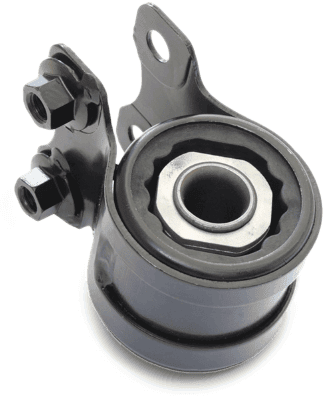
MOOG TO-SB-1939 Trailing arm / Suspension arm bushDiameter: 20,2; Length [mm]: 52,5; Height: 61; Container Type: Bag; Packaging length [cm]: 6,5; Packaging width [cm]: 5,5; Packaging height [cm]: 5,5; Fitting Position: Front Axle, inner, Rear6,59 £*Shipping: 8,45 £Secure redirect to the provider
-
Oradent Dental Prosthesis BrushHealth and Beauty Oral Care Oradent Dental Prosthesis Brush Oradent F Dental Prosthesis Brush Oradent F Dental Prosthesis Brush is a brush specially designed for cleaning dental prostheses, such as dentures, bridges and other orthodontic devices. With soft and flexible bristles, this brush effectively removes food debris, bacteria and plaque accumulated on the prosthesis, ensuring complete oral hygiene and protecting the health of your gums and natural teeth. Its ergonomic design and compact size make it easy to use, ideal for keeping your dentures in perfect condition. Benefits of Oradent F Dental Prosthesis Brush Effective and gentle cleaning: The soft bristles of the Oradent F Denture Brush remove food debris and plaque without damaging the surface of the denture. Infection Prevention: Using this brush regularly helps prevent the buildup of bacteria and fungi, which can cause bad breath or mouth infections. Ergonomic design: Its ergonomic handle makes it easier to grip and use the brush, allowing for more comfortable and precise cleaning. Easy access to difficult areas: The bristles are arranged in a way that allows easy access to the corners and surfaces of the prosthesis, ensuring complete cleaning. Compatibility with all types of prosthetics: Ideal for dentures, bridges and other orthodontic devices, ensuring that any type of prosthesis remains clean and free of debris. Who is Oradent F Denture Brush for? Oradent F Denture Brush is specially designed for people who wear dental prostheses, such as dentures, bridges or implants. It is perfect for those who need to keep their prosthesis clean and free of bacteria on a daily basis. In addition, it is ideal for people with sensitive gums or who wear dentures for a long time, as its soft bristles protect the health of the gums and do not damage the dentures. If you are looking for a brush that offers a gentle but effective cleaning for your dentures, this is the right product. How do I apply it? Using the Oradent F Denture Brush is simple. Here's how to get the most out of it: Wet the brush: Before using the brush, wet the bristles with warm water. This will help soften food residue and make cleaning easier. Apply some toothpaste: Place a small amount of toothpaste on the bristles of the toothbrush. It is recommended to use a toothpaste suitable for dentures. Clean your denture: Gently brush the surfaces of the denture, making sure to clean all areas, including the edges and corners. Use gentle strokes to avoid damaging the denture. Rinse well: After brushing, rinse your dentures with warm water to remove any toothpaste residue or food debris. Use the brush daily: Use this brush as part of your daily cleaning routine to keep your dentures in good condition and prevent bacteria buildup. Product Usage Oradent F Denture Brush should be used regularly as part of daily oral hygiene. Its proper use ensures that your denture remains clean and free of food debris, plaque and bacteria, preventing...5,38 £*Shipping: 3,99 £Secure redirect to the provider
-
Fimo Pontefix Dental Prosthesis Adhesive 50 grHealth and Beauty Oral Care Fimo Pontefix Dental Prosthesis Adhesive 50 gr Pontefix Denture Adhesive 50g is a professional adhesive specially formulated to provide a secure and long-lasting hold for dentures. Thanks to its innovative composition, it guarantees a firm fit all day long, preventing shifting or discomfort, and providing greater comfort for the wearer. Its creamy texture allows for easy and even application, perfectly adapting to the surface of the denture and ensuring a reliable and comfortable wearing experience . Pontefix is the ideal solution for keeping your dentures stable and enjoying the security you need for everyday activities like speaking and eating. Benefits • Provides a durable fixation for partial or complete dentures. • It prevents the prosthesis from moving or causing discomfort during the day. • Improves comfort when chewing, speaking and smiling. • Creamy texture that allows for easy and even application . • Compatible with most dental prosthesis materials. • Reduces irritation and discomfort in the gums. • Reliable and safe formula, developed specifically for denture care. • 50g container, enough for prolonged and practical use at home. Who is it for? • People who use partial or complete dentures. • Ideal for those seeking a secure and stable fit throughout the day. • Recommended for users who experience movement or slippage of the prosthesis. • Perfect for adults who want to increase comfort when eating, speaking, or performing daily activities. • Suitable for any user looking for a reliable and easy-to-apply solution for their dentures. How do I apply it? • Clean and dry the prosthesis before applying the adhesive to ensure better adhesion. • Place a small amount of Pontefix Denture Adhesive on the areas in contact with the gums. • Distribute the product evenly, avoiding excess that could seep outside the prosthesis. • Insert the prosthesis into your mouth and press gently for a few seconds to ensure a secure fit. • Remove any excess adhesive that may ooze out over the edges. • To remove the prosthesis, make gentle movements and rinse with warm water to remove adhesive residue. Product Use • Daily use according to the need for prosthesis fixation. • Ensures stability and comfort during activities such as talking, eating, or smiling. • Compatible with daily cleaning of the prosthesis; it is recommended to remove and clean the prosthesis every night. • Store in a cool, dry place, out of reach of children. • Product safe for oral use and specifically formulated for the care of dental prostheses. Buy Pontefix Dental Prosthesis Adhesive 50 gr Pontefix Denture Adhesive 50g is available in pharmacies, drugstores, and online stores specializing in oral health. Purchasing this adhesive guarantees a reliable and comfortable hold for your dentures, ensuring you can carry out your daily activities safely and comfortably. Its 50g container provides a sufficient supply for extended use, combining effectiveness, comfort, and...29,37 £*Shipping: 3,99 £Secure redirect to the provider
-
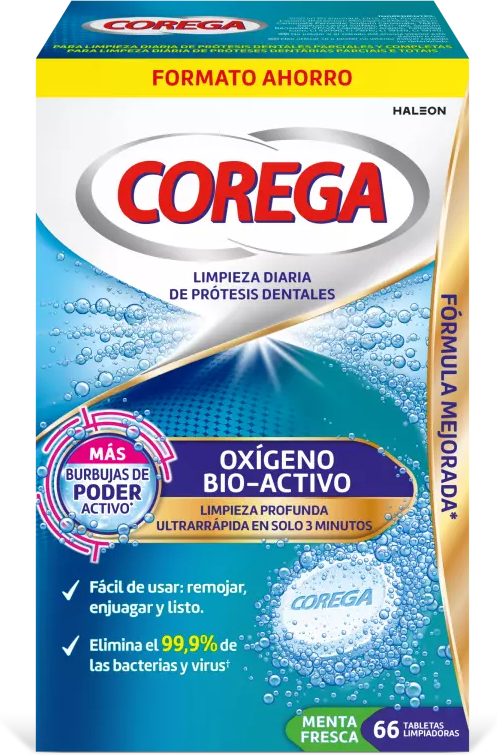
Corega Bioactive Oxygen Dental Prosthesis Cleaning 66 UnitsHealth and Beauty Oral Care Corega Bioactive Oxygen Dental Prosthesis Cleaning 66 Units Partial denture tablets help protect natural teeth as part of good daily oral hygiene. For good daily oral hygiene: 1. Brush your natural teeth twice a day with a fluoride toothpaste. 2. Wash your partial denture daily with cleanser and protects. 3. Use seal and protect to stabilize your partial denture. 4. Visit your dentist regularly (every 6 months). Instructions for use: Place one tablet in a container with enough warm water (not too much) to cover the partial denture. Leave the partial denture immersed in the solution for 3-5 minutes. For best results, brush the partial denture with a soft toothbrush. Rinse the partial denture thoroughly with water. Discard any remaining solution immediately after use. Precautions for use: - Do not touch your eyes or mouth after handling the tablets or solution. - Do not use if you are allergic to any of the ingredients. - Do not place tablets or solution in your mouth. - Do not drink the cleaning solution or use it as a mouthwash.13,54 £*Shipping: 3,99 £Secure redirect to the provider


-
What happened between 1930 and 1939?
During the period between 1930 and 1939, the world experienced significant events such as the Great Depression, which began in 1929 and lasted throughout the 1930s, leading to widespread economic hardship. In addition, political tensions were rising in Europe, particularly with the rise of fascist regimes in countries like Germany and Italy. This decade also saw the outbreak of World War II in 1939, marking a turning point in global history and leading to widespread devastation and loss of life. **
-
What happened in the year 1939?
In 1939, several significant events occurred. World War II began with the invasion of Poland by Nazi Germany on September 1st, leading to the outbreak of a global conflict. The Spanish Civil War also came to an end with the victory of Francisco Franco's Nationalist forces. Additionally, the New York World's Fair opened, showcasing the latest technological and cultural advancements of the time. Lastly, the film "Gone with the Wind" premiered in Atlanta, becoming a major success and a classic of American cinema. **
-
What is dental prosthesis?
Dental prosthesis refers to artificial devices that are used to replace missing teeth or restore the function and appearance of natural teeth. These prosthetic devices can include dentures, dental crowns, bridges, and dental implants. They are custom-made to fit each patient's mouth and are designed to improve their ability to chew, speak, and smile. Dental prosthesis plays a crucial role in restoring oral health and enhancing the overall quality of life for individuals with missing or damaged teeth. **
-
Who finances dental implants?
Dental implants are typically financed through a combination of personal savings, dental insurance, and financing options offered by dental offices. Some dental insurance plans may cover a portion of the cost of dental implants, while others may not cover them at all. Many dental offices also offer financing plans or payment options to help patients cover the cost of dental implants over time. Additionally, some patients may choose to use personal savings or other forms of financing, such as medical loans or credit cards, to cover the cost of dental implants. **
Why did Hitler attack Poland in 1939?
Hitler attacked Poland in 1939 as part of his expansionist goals to create a greater German empire. He believed in the concept of Lebensraum, or living space, for the German people and sought to annex territories in Eastern Europe. The invasion of Poland also allowed Hitler to test the military strength of his forces and gauge the reactions of other European powers. Ultimately, the attack on Poland marked the beginning of World War II as it prompted Britain and France to declare war on Germany. **
Where was Hitler between 1918 and 1939?
Between 1918 and 1939, Adolf Hitler was primarily in Germany. After World War I, he returned to Munich and became involved in politics, eventually leading the National Socialist German Workers' Party (Nazi Party). He was imprisoned for a failed coup in 1923 and wrote his infamous book, Mein Kampf, during his time in prison. After his release, he focused on rebuilding the Nazi Party and gaining political power, eventually becoming Chancellor of Germany in 1933 and later consolidating his power as dictator. **
Top-Angebote
Products related to 1939:
-
HJS 83 11 1939 Exhaust clampPipe Connector: Clamping Clip; Diameter: 30; Material: Stainless Steel; EU General Product Safety Regulation (GPSR): IEC 60417-6183 mechanical expertise required; Fitting Position: Exhaust Manifold; Construction Year to: 11/2006; Vehicle Identification Number (VIN) from: 7L-3-007 533, 7H-3-000 001, 7J-3-000 001, 7H-A-050 000, 7H-4-091 532, 7J-4-038 480, 7H-4-023 696, 7J-6-035 867, 7L-4-013 967; Vehicle Identification Number (VIN) to: 7L-7-060 622, 7H-A-050 000, 7J-A-010 000; TecDoc Engine Number: 16855, 16868, 16869, 20505, 20506; Construction Year from: 05/200610,49 £*Shipping: 8,45 £Secure redirect to the provider
-
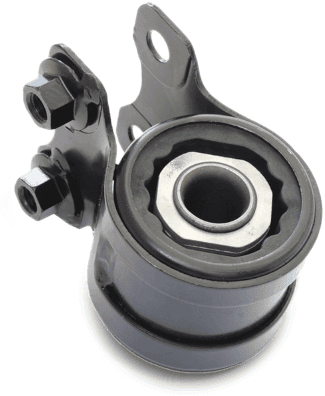
VAICO V20-1939 Trailing arm / Suspension arm bushPaired product: V20-1940; Outer Diameter [mm]: 66; Axle alignment required after fitting: ; Inner Diameter [mm]: 17; Fitting Position: Front Axle Left; Control/Trailing Arm Type: for control arm; Mounting Type: Hydro Mount; Weight [kg]: 2,525; Packaging width [cm]: 26,9; Packaging height [cm]: 16,7; Packaging Depth [cm]: 46,2; Supplementary Info: Original VAICO Quality; Engine Code: N16, N18, N12, 9HZ32,49 £*Shipping: 8,45 £Secure redirect to the provider
-
MOOG TO-SB-1939 Trailing arm / Suspension arm bushDiameter: 20,2; Length [mm]: 52,5; Height: 61; Container Type: Bag; Packaging length [cm]: 6,5; Packaging width [cm]: 5,5; Packaging height [cm]: 5,5; Fitting Position: Front Axle, inner, Rear6,59 £*Shipping: 8,45 £Secure redirect to the provider
-
Oradent Dental Prosthesis BrushHealth and Beauty Oral Care Oradent Dental Prosthesis Brush Oradent F Dental Prosthesis Brush Oradent F Dental Prosthesis Brush is a brush specially designed for cleaning dental prostheses, such as dentures, bridges and other orthodontic devices. With soft and flexible bristles, this brush effectively removes food debris, bacteria and plaque accumulated on the prosthesis, ensuring complete oral hygiene and protecting the health of your gums and natural teeth. Its ergonomic design and compact size make it easy to use, ideal for keeping your dentures in perfect condition. Benefits of Oradent F Dental Prosthesis Brush Effective and gentle cleaning: The soft bristles of the Oradent F Denture Brush remove food debris and plaque without damaging the surface of the denture. Infection Prevention: Using this brush regularly helps prevent the buildup of bacteria and fungi, which can cause bad breath or mouth infections. Ergonomic design: Its ergonomic handle makes it easier to grip and use the brush, allowing for more comfortable and precise cleaning. Easy access to difficult areas: The bristles are arranged in a way that allows easy access to the corners and surfaces of the prosthesis, ensuring complete cleaning. Compatibility with all types of prosthetics: Ideal for dentures, bridges and other orthodontic devices, ensuring that any type of prosthesis remains clean and free of debris. Who is Oradent F Denture Brush for? Oradent F Denture Brush is specially designed for people who wear dental prostheses, such as dentures, bridges or implants. It is perfect for those who need to keep their prosthesis clean and free of bacteria on a daily basis. In addition, it is ideal for people with sensitive gums or who wear dentures for a long time, as its soft bristles protect the health of the gums and do not damage the dentures. If you are looking for a brush that offers a gentle but effective cleaning for your dentures, this is the right product. How do I apply it? Using the Oradent F Denture Brush is simple. Here's how to get the most out of it: Wet the brush: Before using the brush, wet the bristles with warm water. This will help soften food residue and make cleaning easier. Apply some toothpaste: Place a small amount of toothpaste on the bristles of the toothbrush. It is recommended to use a toothpaste suitable for dentures. Clean your denture: Gently brush the surfaces of the denture, making sure to clean all areas, including the edges and corners. Use gentle strokes to avoid damaging the denture. Rinse well: After brushing, rinse your dentures with warm water to remove any toothpaste residue or food debris. Use the brush daily: Use this brush as part of your daily cleaning routine to keep your dentures in good condition and prevent bacteria buildup. Product Usage Oradent F Denture Brush should be used regularly as part of daily oral hygiene. Its proper use ensures that your denture remains clean and free of food debris, plaque and bacteria, preventing...5,38 £*Shipping: 3,99 £Secure redirect to the provider
-
Did Poland surrender in 1939?
Yes, Poland did surrender in 1939 after being invaded by both Germany and the Soviet Union. The invasion of Poland marked the beginning of World War II. Despite putting up a valiant defense, Poland was unable to withstand the combined forces of the two powerful aggressors and was forced to surrender. This led to the occupation of Poland by both Germany and the Soviet Union for the duration of the war. **
-
Dental implants or dental bridges?
The choice between dental implants and dental bridges depends on various factors such as the patient's oral health, budget, and personal preferences. Dental implants are a more permanent solution as they are surgically placed into the jawbone and can last a lifetime with proper care. On the other hand, dental bridges are a more cost-effective option that can be a good choice for patients who are not suitable candidates for implants. It is best to consult with a dentist to determine which option is most suitable for your specific needs. **
-
What happened between 1930 and 1939?
During the period between 1930 and 1939, the world experienced significant events such as the Great Depression, which began in 1929 and lasted throughout the 1930s, leading to widespread economic hardship. In addition, political tensions were rising in Europe, particularly with the rise of fascist regimes in countries like Germany and Italy. This decade also saw the outbreak of World War II in 1939, marking a turning point in global history and leading to widespread devastation and loss of life. **
-
What happened in the year 1939?
In 1939, several significant events occurred. World War II began with the invasion of Poland by Nazi Germany on September 1st, leading to the outbreak of a global conflict. The Spanish Civil War also came to an end with the victory of Francisco Franco's Nationalist forces. Additionally, the New York World's Fair opened, showcasing the latest technological and cultural advancements of the time. Lastly, the film "Gone with the Wind" premiered in Atlanta, becoming a major success and a classic of American cinema. **
Similar search terms for 1939
-
Fimo Pontefix Dental Prosthesis Adhesive 50 grHealth and Beauty Oral Care Fimo Pontefix Dental Prosthesis Adhesive 50 gr Pontefix Denture Adhesive 50g is a professional adhesive specially formulated to provide a secure and long-lasting hold for dentures. Thanks to its innovative composition, it guarantees a firm fit all day long, preventing shifting or discomfort, and providing greater comfort for the wearer. Its creamy texture allows for easy and even application, perfectly adapting to the surface of the denture and ensuring a reliable and comfortable wearing experience . Pontefix is the ideal solution for keeping your dentures stable and enjoying the security you need for everyday activities like speaking and eating. Benefits • Provides a durable fixation for partial or complete dentures. • It prevents the prosthesis from moving or causing discomfort during the day. • Improves comfort when chewing, speaking and smiling. • Creamy texture that allows for easy and even application . • Compatible with most dental prosthesis materials. • Reduces irritation and discomfort in the gums. • Reliable and safe formula, developed specifically for denture care. • 50g container, enough for prolonged and practical use at home. Who is it for? • People who use partial or complete dentures. • Ideal for those seeking a secure and stable fit throughout the day. • Recommended for users who experience movement or slippage of the prosthesis. • Perfect for adults who want to increase comfort when eating, speaking, or performing daily activities. • Suitable for any user looking for a reliable and easy-to-apply solution for their dentures. How do I apply it? • Clean and dry the prosthesis before applying the adhesive to ensure better adhesion. • Place a small amount of Pontefix Denture Adhesive on the areas in contact with the gums. • Distribute the product evenly, avoiding excess that could seep outside the prosthesis. • Insert the prosthesis into your mouth and press gently for a few seconds to ensure a secure fit. • Remove any excess adhesive that may ooze out over the edges. • To remove the prosthesis, make gentle movements and rinse with warm water to remove adhesive residue. Product Use • Daily use according to the need for prosthesis fixation. • Ensures stability and comfort during activities such as talking, eating, or smiling. • Compatible with daily cleaning of the prosthesis; it is recommended to remove and clean the prosthesis every night. • Store in a cool, dry place, out of reach of children. • Product safe for oral use and specifically formulated for the care of dental prostheses. Buy Pontefix Dental Prosthesis Adhesive 50 gr Pontefix Denture Adhesive 50g is available in pharmacies, drugstores, and online stores specializing in oral health. Purchasing this adhesive guarantees a reliable and comfortable hold for your dentures, ensuring you can carry out your daily activities safely and comfortably. Its 50g container provides a sufficient supply for extended use, combining effectiveness, comfort, and...29,37 £*Shipping: 3,99 £Secure redirect to the provider
-
Corega Bioactive Oxygen Dental Prosthesis Cleaning 66 UnitsHealth and Beauty Oral Care Corega Bioactive Oxygen Dental Prosthesis Cleaning 66 Units Partial denture tablets help protect natural teeth as part of good daily oral hygiene. For good daily oral hygiene: 1. Brush your natural teeth twice a day with a fluoride toothpaste. 2. Wash your partial denture daily with cleanser and protects. 3. Use seal and protect to stabilize your partial denture. 4. Visit your dentist regularly (every 6 months). Instructions for use: Place one tablet in a container with enough warm water (not too much) to cover the partial denture. Leave the partial denture immersed in the solution for 3-5 minutes. For best results, brush the partial denture with a soft toothbrush. Rinse the partial denture thoroughly with water. Discard any remaining solution immediately after use. Precautions for use: - Do not touch your eyes or mouth after handling the tablets or solution. - Do not use if you are allergic to any of the ingredients. - Do not place tablets or solution in your mouth. - Do not drink the cleaning solution or use it as a mouthwash.13,54 £*Shipping: 3,99 £Secure redirect to the provider
-
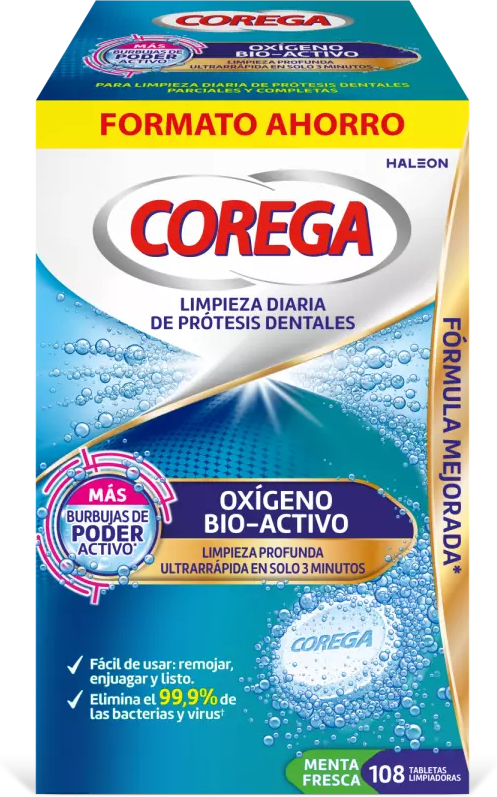
Corega Bioactive Oxygen Dental Prosthesis Cleaning 108 UnitsHealth and Beauty Oral Care Corega Bioactive Oxygen Dental Prosthesis Cleaning 108 Units Partial denture tablets help protect natural teeth as part of good daily oral hygiene. For good daily oral hygiene: 1. Brush your natural teeth twice a day with a fluoride toothpaste. 2. Wash your partial denture daily with cleanser and protects. 3. Use seal and protect to stabilize your partial denture. 4. Visit your dentist regularly (every 6 months). Instructions for use: Place one tablet in a container with enough warm water (not too much) to cover the partial denture. Leave the partial denture immersed in the solution for 3-5 minutes. For best results, brush the partial denture with a soft toothbrush. Rinse the partial denture thoroughly with water. Discard any remaining solution immediately after use. Precautions for use: - Do not touch your eyes or mouth after handling the tablets or solution. - Do not use if you are allergic to any of the ingredients. - Do not place tablets or solution in your mouth. - Do not drink the cleaning solution or use it as a mouthwash.16,17 £*Shipping: 3,99 £Secure redirect to the provider
-
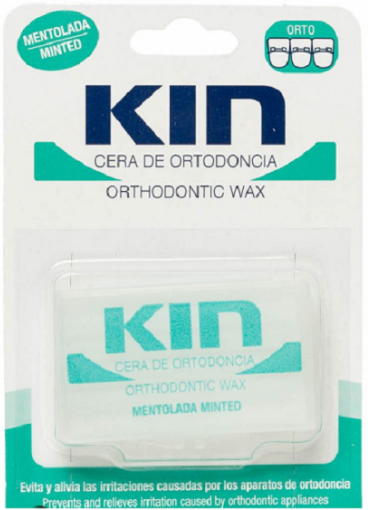
Kin Mentholated wax OrthodonticsHealth and Beauty Oral Care Kin Mentholated wax Orthodontics Mentholated orthodontic wax to prevent the brackets from rubbing the buccal mucose by covering the edges of the appliances and braces. Contains five 4.5 mm x 55 mm wax bars. Guidelines for administration Cut off a piece of the orthodontic wax from the case and apply on the area (wire or bracket) causing the pain. Presentations: 5 barras6,26 £*Shipping: 3,99 £Secure redirect to the provider
-
What is dental prosthesis?
Dental prosthesis refers to artificial devices that are used to replace missing teeth or restore the function and appearance of natural teeth. These prosthetic devices can include dentures, dental crowns, bridges, and dental implants. They are custom-made to fit each patient's mouth and are designed to improve their ability to chew, speak, and smile. Dental prosthesis plays a crucial role in restoring oral health and enhancing the overall quality of life for individuals with missing or damaged teeth. **
-
Who finances dental implants?
Dental implants are typically financed through a combination of personal savings, dental insurance, and financing options offered by dental offices. Some dental insurance plans may cover a portion of the cost of dental implants, while others may not cover them at all. Many dental offices also offer financing plans or payment options to help patients cover the cost of dental implants over time. Additionally, some patients may choose to use personal savings or other forms of financing, such as medical loans or credit cards, to cover the cost of dental implants. **
-
Why did Hitler attack Poland in 1939?
Hitler attacked Poland in 1939 as part of his expansionist goals to create a greater German empire. He believed in the concept of Lebensraum, or living space, for the German people and sought to annex territories in Eastern Europe. The invasion of Poland also allowed Hitler to test the military strength of his forces and gauge the reactions of other European powers. Ultimately, the attack on Poland marked the beginning of World War II as it prompted Britain and France to declare war on Germany. **
-
Where was Hitler between 1918 and 1939?
Between 1918 and 1939, Adolf Hitler was primarily in Germany. After World War I, he returned to Munich and became involved in politics, eventually leading the National Socialist German Workers' Party (Nazi Party). He was imprisoned for a failed coup in 1923 and wrote his infamous book, Mein Kampf, during his time in prison. After his release, he focused on rebuilding the Nazi Party and gaining political power, eventually becoming Chancellor of Germany in 1933 and later consolidating his power as dictator. **
* All prices are inclusive of VAT and, if applicable, plus shipping costs. The offer information is based on the details provided by the respective shop and is updated through automated processes. Real-time updates do not occur, so deviations can occur in individual cases. ** Note: Parts of this content were created by AI.