Buy zahnlabor.eu ?
We are moving the project
zahnlabor.eu .
Are you interested in purchasing the domain
zahnlabor.eu ?
domain@kv-gmbh.de · 0541-91531010
Buy zahnlabor.eu ?
How is electronegativity created?
Electronegativity is created by the ability of an atom to attract electrons towards itself in a chemical bond. This ability is influenced by factors such as the number of protons in the nucleus, the distance between the nucleus and the outer electrons, and the shielding effect of inner electron shells. Atoms with a higher electronegativity value tend to attract electrons more strongly, leading to the formation of polar covalent bonds or ionic bonds in chemical compounds. **
What is electronegativity difference?
Electronegativity difference is a measure of the difference in electronegativity values between two atoms in a chemical bond. Electronegativity is the ability of an atom to attract shared electrons in a covalent bond. The greater the electronegativity difference between two atoms, the more polar the bond will be. This difference in electronegativity influences the distribution of electrons in the bond, leading to the formation of polar or nonpolar covalent bonds. **


Similar search terms for Electronegativity
Top-Angebote
Products related to Electronegativity:
-
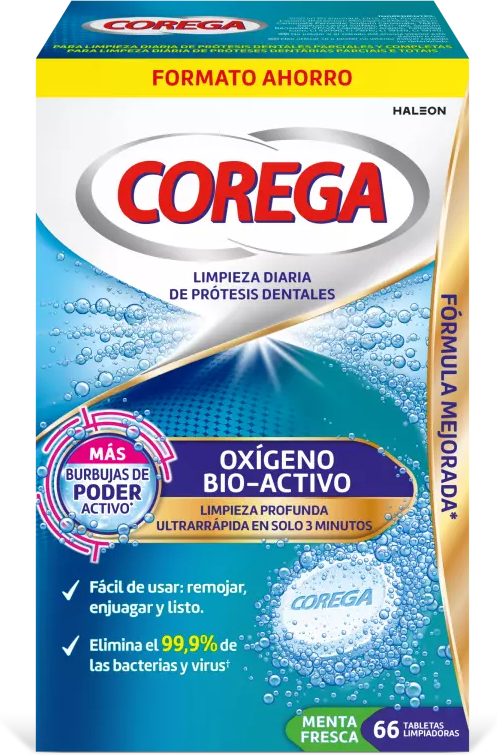
Corega Bioactive Oxygen Dental Prosthesis Cleaning 66 UnitsHealth and Beauty Oral Care Corega Bioactive Oxygen Dental Prosthesis Cleaning 66 Units Partial denture tablets help protect natural teeth as part of good daily oral hygiene. For good daily oral hygiene: 1. Brush your natural teeth twice a day with a fluoride toothpaste. 2. Wash your partial denture daily with cleanser and protects. 3. Use seal and protect to stabilize your partial denture. 4. Visit your dentist regularly (every 6 months). Instructions for use: Place one tablet in a container with enough warm water (not too much) to cover the partial denture. Leave the partial denture immersed in the solution for 3-5 minutes. For best results, brush the partial denture with a soft toothbrush. Rinse the partial denture thoroughly with water. Discard any remaining solution immediately after use. Precautions for use: - Do not touch your eyes or mouth after handling the tablets or solution. - Do not use if you are allergic to any of the ingredients. - Do not place tablets or solution in your mouth. - Do not drink the cleaning solution or use it as a mouthwash.13,58 £*Shipping: 3,99 £Secure redirect to the provider
-
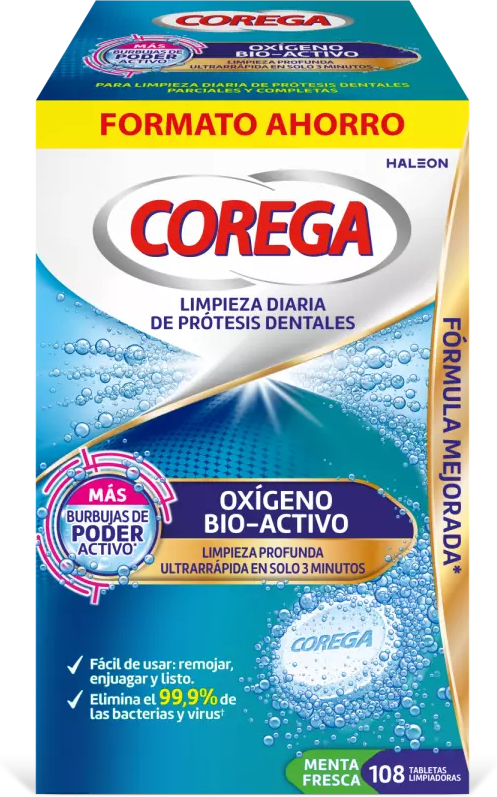
Corega Bioactive Oxygen Dental Prosthesis Cleaning 108 UnitsHealth and Beauty Oral Care Corega Bioactive Oxygen Dental Prosthesis Cleaning 108 Units Partial denture tablets help protect natural teeth as part of good daily oral hygiene. For good daily oral hygiene: 1. Brush your natural teeth twice a day with a fluoride toothpaste. 2. Wash your partial denture daily with cleanser and protects. 3. Use seal and protect to stabilize your partial denture. 4. Visit your dentist regularly (every 6 months). Instructions for use: Place one tablet in a container with enough warm water (not too much) to cover the partial denture. Leave the partial denture immersed in the solution for 3-5 minutes. For best results, brush the partial denture with a soft toothbrush. Rinse the partial denture thoroughly with water. Discard any remaining solution immediately after use. Precautions for use: - Do not touch your eyes or mouth after handling the tablets or solution. - Do not use if you are allergic to any of the ingredients. - Do not place tablets or solution in your mouth. - Do not drink the cleaning solution or use it as a mouthwash.16,22 £*Shipping: 3,99 £Secure redirect to the provider
-
Kin Normal wax OrthodonticsHealth and Beauty Oral Care Kin Normal wax Orthodontics Orthodontic wax to prevent the brackets from rubbing the buccal mucose by covering the edges of the appliances and braces causing the pain. Contains five 4.5 mm x 55 mm bars. Guidelines for administration: Cut a piece of the orthodontic wax from the case and apply on the area (wire or bracket) causing the pain. Presentations: 5 barras6,28 £*Shipping: 3,99 £Secure redirect to the provider
-
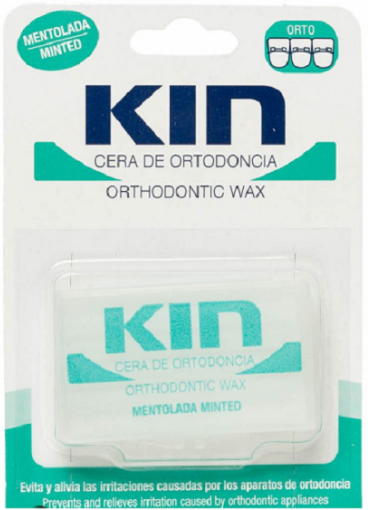
Kin Mentholated wax OrthodonticsHealth and Beauty Oral Care Kin Mentholated wax Orthodontics Mentholated orthodontic wax to prevent the brackets from rubbing the buccal mucose by covering the edges of the appliances and braces. Contains five 4.5 mm x 55 mm wax bars. Guidelines for administration Cut off a piece of the orthodontic wax from the case and apply on the area (wire or bracket) causing the pain. Presentations: 5 barras6,28 £*Shipping: 3,99 £Secure redirect to the provider

-
How is electronegativity formed?
Electronegativity is a measure of an atom's ability to attract and hold onto electrons in a chemical bond. It is determined by factors such as the number of protons in the nucleus, the distance between the nucleus and the outer electrons, and the shielding effect of inner electron shells. Electronegativity values are assigned to each element based on these factors, with fluorine having the highest electronegativity value of 4.0. The electronegativity of an element can also vary depending on its chemical environment and bonding partners. **
-
How do I calculate electronegativity?
Electronegativity is calculated using the Pauling scale, which assigns a numerical value to each element based on its ability to attract electrons in a chemical bond. The electronegativity values range from 0.7 for cesium to 4.0 for fluorine. To calculate the electronegativity difference between two elements in a bond, subtract the electronegativity value of the less electronegative element from the value of the more electronegative element. This difference can help predict the type of bond that will form between the two elements. **
-
What is the electronegativity difference?
Electronegativity difference is a measure of the difference in electronegativity values between two atoms in a chemical bond. It helps to determine the polarity of the bond, with larger differences indicating a more polar bond. The greater the electronegativity difference, the more unequal the sharing of electrons between the atoms, leading to a stronger attraction between them. This difference in electronegativity influences the overall properties and behavior of the molecules involved. **
-
How can one recognize electronegativity?
Electronegativity is a measure of an atom's ability to attract and hold onto electrons in a chemical bond. One way to recognize electronegativity is by looking at the periodic table - electronegativity generally increases from left to right across a period and decreases down a group. Elements with higher electronegativity values tend to attract electrons more strongly, leading to the formation of polar covalent bonds. Additionally, electronegativity values can be used to predict the direction of electron movement in a chemical reaction or bond formation. **

What are the electronegativity values?
Electronegativity values are a measure of the ability of an atom to attract electrons in a chemical bond. The values range from 0.7 for the least electronegative elements to 4.0 for the most electronegative elements. The electronegativity values are used to predict the type of bond that will form between two atoms, with larger differences in electronegativity leading to more polar bonds. The values were first proposed by Linus Pauling and are an important concept in understanding chemical bonding and reactivity. **
Dental implants or dental bridges?
The choice between dental implants and dental bridges depends on various factors such as the patient's oral health, budget, and personal preferences. Dental implants are a more permanent solution as they are surgically placed into the jawbone and can last a lifetime with proper care. On the other hand, dental bridges are a more cost-effective option that can be a good choice for patients who are not suitable candidates for implants. It is best to consult with a dentist to determine which option is most suitable for your specific needs. **
Top-Angebote
Products related to Electronegativity:
-
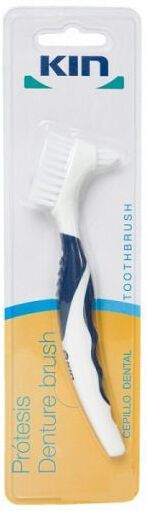
Oradent Dental Prosthesis BrushHealth and Beauty Oral Care Oradent Dental Prosthesis Brush Oradent F Dental Prosthesis Brush Oradent F Dental Prosthesis Brush is a brush specially designed for cleaning dental prostheses, such as dentures, bridges and other orthodontic devices. With soft and flexible bristles, this brush effectively removes food debris, bacteria and plaque accumulated on the prosthesis, ensuring complete oral hygiene and protecting the health of your gums and natural teeth. Its ergonomic design and compact size make it easy to use, ideal for keeping your dentures in perfect condition. Benefits of Oradent F Dental Prosthesis Brush Effective and gentle cleaning: The soft bristles of the Oradent F Denture Brush remove food debris and plaque without damaging the surface of the denture. Infection Prevention: Using this brush regularly helps prevent the buildup of bacteria and fungi, which can cause bad breath or mouth infections. Ergonomic design: Its ergonomic handle makes it easier to grip and use the brush, allowing for more comfortable and precise cleaning. Easy access to difficult areas: The bristles are arranged in a way that allows easy access to the corners and surfaces of the prosthesis, ensuring complete cleaning. Compatibility with all types of prosthetics: Ideal for dentures, bridges and other orthodontic devices, ensuring that any type of prosthesis remains clean and free of debris. Who is Oradent F Denture Brush for? Oradent F Denture Brush is specially designed for people who wear dental prostheses, such as dentures, bridges or implants. It is perfect for those who need to keep their prosthesis clean and free of bacteria on a daily basis. In addition, it is ideal for people with sensitive gums or who wear dentures for a long time, as its soft bristles protect the health of the gums and do not damage the dentures. If you are looking for a brush that offers a gentle but effective cleaning for your dentures, this is the right product. How do I apply it? Using the Oradent F Denture Brush is simple. Here's how to get the most out of it: Wet the brush: Before using the brush, wet the bristles with warm water. This will help soften food residue and make cleaning easier. Apply some toothpaste: Place a small amount of toothpaste on the bristles of the toothbrush. It is recommended to use a toothpaste suitable for dentures. Clean your denture: Gently brush the surfaces of the denture, making sure to clean all areas, including the edges and corners. Use gentle strokes to avoid damaging the denture. Rinse well: After brushing, rinse your dentures with warm water to remove any toothpaste residue or food debris. Use the brush daily: Use this brush as part of your daily cleaning routine to keep your dentures in good condition and prevent bacteria buildup. Product Usage Oradent F Denture Brush should be used regularly as part of daily oral hygiene. Its proper use ensures that your denture remains clean and free of food debris, plaque and bacteria, preventing...5,40 £*Shipping: 3,99 £Secure redirect to the provider
-
Fimo Pontefix Dental Prosthesis Adhesive 50 grHealth and Beauty Oral Care Fimo Pontefix Dental Prosthesis Adhesive 50 gr Pontefix Denture Adhesive 50g is a professional adhesive specially formulated to provide a secure and long-lasting hold for dentures. Thanks to its innovative composition, it guarantees a firm fit all day long, preventing shifting or discomfort, and providing greater comfort for the wearer. Its creamy texture allows for easy and even application, perfectly adapting to the surface of the denture and ensuring a reliable and comfortable wearing experience . Pontefix is the ideal solution for keeping your dentures stable and enjoying the security you need for everyday activities like speaking and eating. Benefits • Provides a durable fixation for partial or complete dentures. • It prevents the prosthesis from moving or causing discomfort during the day. • Improves comfort when chewing, speaking and smiling. • Creamy texture that allows for easy and even application . • Compatible with most dental prosthesis materials. • Reduces irritation and discomfort in the gums. • Reliable and safe formula, developed specifically for denture care. • 50g container, enough for prolonged and practical use at home. Who is it for? • People who use partial or complete dentures. • Ideal for those seeking a secure and stable fit throughout the day. • Recommended for users who experience movement or slippage of the prosthesis. • Perfect for adults who want to increase comfort when eating, speaking, or performing daily activities. • Suitable for any user looking for a reliable and easy-to-apply solution for their dentures. How do I apply it? • Clean and dry the prosthesis before applying the adhesive to ensure better adhesion. • Place a small amount of Pontefix Denture Adhesive on the areas in contact with the gums. • Distribute the product evenly, avoiding excess that could seep outside the prosthesis. • Insert the prosthesis into your mouth and press gently for a few seconds to ensure a secure fit. • Remove any excess adhesive that may ooze out over the edges. • To remove the prosthesis, make gentle movements and rinse with warm water to remove adhesive residue. Product Use • Daily use according to the need for prosthesis fixation. • Ensures stability and comfort during activities such as talking, eating, or smiling. • Compatible with daily cleaning of the prosthesis; it is recommended to remove and clean the prosthesis every night. • Store in a cool, dry place, out of reach of children. • Product safe for oral use and specifically formulated for the care of dental prostheses. Buy Pontefix Dental Prosthesis Adhesive 50 gr Pontefix Denture Adhesive 50g is available in pharmacies, drugstores, and online stores specializing in oral health. Purchasing this adhesive guarantees a reliable and comfortable hold for your dentures, ensuring you can carry out your daily activities safely and comfortably. Its 50g container provides a sufficient supply for extended use, combining effectiveness, comfort, and...29,36 £*Shipping: 3,99 £Secure redirect to the provider
-
Corega Bioactive Oxygen Dental Prosthesis Cleaning 66 UnitsHealth and Beauty Oral Care Corega Bioactive Oxygen Dental Prosthesis Cleaning 66 Units Partial denture tablets help protect natural teeth as part of good daily oral hygiene. For good daily oral hygiene: 1. Brush your natural teeth twice a day with a fluoride toothpaste. 2. Wash your partial denture daily with cleanser and protects. 3. Use seal and protect to stabilize your partial denture. 4. Visit your dentist regularly (every 6 months). Instructions for use: Place one tablet in a container with enough warm water (not too much) to cover the partial denture. Leave the partial denture immersed in the solution for 3-5 minutes. For best results, brush the partial denture with a soft toothbrush. Rinse the partial denture thoroughly with water. Discard any remaining solution immediately after use. Precautions for use: - Do not touch your eyes or mouth after handling the tablets or solution. - Do not use if you are allergic to any of the ingredients. - Do not place tablets or solution in your mouth. - Do not drink the cleaning solution or use it as a mouthwash.13,58 £*Shipping: 3,99 £Secure redirect to the provider
-
Corega Bioactive Oxygen Dental Prosthesis Cleaning 108 UnitsHealth and Beauty Oral Care Corega Bioactive Oxygen Dental Prosthesis Cleaning 108 Units Partial denture tablets help protect natural teeth as part of good daily oral hygiene. For good daily oral hygiene: 1. Brush your natural teeth twice a day with a fluoride toothpaste. 2. Wash your partial denture daily with cleanser and protects. 3. Use seal and protect to stabilize your partial denture. 4. Visit your dentist regularly (every 6 months). Instructions for use: Place one tablet in a container with enough warm water (not too much) to cover the partial denture. Leave the partial denture immersed in the solution for 3-5 minutes. For best results, brush the partial denture with a soft toothbrush. Rinse the partial denture thoroughly with water. Discard any remaining solution immediately after use. Precautions for use: - Do not touch your eyes or mouth after handling the tablets or solution. - Do not use if you are allergic to any of the ingredients. - Do not place tablets or solution in your mouth. - Do not drink the cleaning solution or use it as a mouthwash.16,22 £*Shipping: 3,99 £Secure redirect to the provider
-
How is electronegativity created?
Electronegativity is created by the ability of an atom to attract electrons towards itself in a chemical bond. This ability is influenced by factors such as the number of protons in the nucleus, the distance between the nucleus and the outer electrons, and the shielding effect of inner electron shells. Atoms with a higher electronegativity value tend to attract electrons more strongly, leading to the formation of polar covalent bonds or ionic bonds in chemical compounds. **
-
What is electronegativity difference?
Electronegativity difference is a measure of the difference in electronegativity values between two atoms in a chemical bond. Electronegativity is the ability of an atom to attract shared electrons in a covalent bond. The greater the electronegativity difference between two atoms, the more polar the bond will be. This difference in electronegativity influences the distribution of electrons in the bond, leading to the formation of polar or nonpolar covalent bonds. **
-
How is electronegativity formed?
Electronegativity is a measure of an atom's ability to attract and hold onto electrons in a chemical bond. It is determined by factors such as the number of protons in the nucleus, the distance between the nucleus and the outer electrons, and the shielding effect of inner electron shells. Electronegativity values are assigned to each element based on these factors, with fluorine having the highest electronegativity value of 4.0. The electronegativity of an element can also vary depending on its chemical environment and bonding partners. **
-
How do I calculate electronegativity?
Electronegativity is calculated using the Pauling scale, which assigns a numerical value to each element based on its ability to attract electrons in a chemical bond. The electronegativity values range from 0.7 for cesium to 4.0 for fluorine. To calculate the electronegativity difference between two elements in a bond, subtract the electronegativity value of the less electronegative element from the value of the more electronegative element. This difference can help predict the type of bond that will form between the two elements. **
Similar search terms for Electronegativity
-
Kin Normal wax OrthodonticsHealth and Beauty Oral Care Kin Normal wax Orthodontics Orthodontic wax to prevent the brackets from rubbing the buccal mucose by covering the edges of the appliances and braces causing the pain. Contains five 4.5 mm x 55 mm bars. Guidelines for administration: Cut a piece of the orthodontic wax from the case and apply on the area (wire or bracket) causing the pain. Presentations: 5 barras6,28 £*Shipping: 3,99 £Secure redirect to the provider
-
Kin Mentholated wax OrthodonticsHealth and Beauty Oral Care Kin Mentholated wax Orthodontics Mentholated orthodontic wax to prevent the brackets from rubbing the buccal mucose by covering the edges of the appliances and braces. Contains five 4.5 mm x 55 mm wax bars. Guidelines for administration Cut off a piece of the orthodontic wax from the case and apply on the area (wire or bracket) causing the pain. Presentations: 5 barras6,28 £*Shipping: 3,99 £Secure redirect to the provider
-
Inspire Essentials ProDent 7 Piece Dental Resin Filler And Restoration Tool Set ProDent 7 Piece Dental Resin Filler And Restoration Tool SetAchieve precision, control, and professional results with the ProDent 7 Piece Dental Resin Filler and Restoration Tool Set. Designed for dentists and dental technicians, this dental resin filling tool kit is perfect for shaping, contouring, and...47,98 $*Shipping: 0,00 $Secure redirect to the provider
-
What is the electronegativity difference?
Electronegativity difference is a measure of the difference in electronegativity values between two atoms in a chemical bond. It helps to determine the polarity of the bond, with larger differences indicating a more polar bond. The greater the electronegativity difference, the more unequal the sharing of electrons between the atoms, leading to a stronger attraction between them. This difference in electronegativity influences the overall properties and behavior of the molecules involved. **
-
How can one recognize electronegativity?
Electronegativity is a measure of an atom's ability to attract and hold onto electrons in a chemical bond. One way to recognize electronegativity is by looking at the periodic table - electronegativity generally increases from left to right across a period and decreases down a group. Elements with higher electronegativity values tend to attract electrons more strongly, leading to the formation of polar covalent bonds. Additionally, electronegativity values can be used to predict the direction of electron movement in a chemical reaction or bond formation. **
-
What are the electronegativity values?
Electronegativity values are a measure of the ability of an atom to attract electrons in a chemical bond. The values range from 0.7 for the least electronegative elements to 4.0 for the most electronegative elements. The electronegativity values are used to predict the type of bond that will form between two atoms, with larger differences in electronegativity leading to more polar bonds. The values were first proposed by Linus Pauling and are an important concept in understanding chemical bonding and reactivity. **
-
Dental implants or dental bridges?
The choice between dental implants and dental bridges depends on various factors such as the patient's oral health, budget, and personal preferences. Dental implants are a more permanent solution as they are surgically placed into the jawbone and can last a lifetime with proper care. On the other hand, dental bridges are a more cost-effective option that can be a good choice for patients who are not suitable candidates for implants. It is best to consult with a dentist to determine which option is most suitable for your specific needs. **
* All prices are inclusive of VAT and, if applicable, plus shipping costs. The offer information is based on the details provided by the respective shop and is updated through automated processes. Real-time updates do not occur, so deviations can occur in individual cases. ** Note: Parts of this content were created by AI.