Buy zahnlabor.eu ?
We are moving the project
zahnlabor.eu .
Are you interested in purchasing the domain
zahnlabor.eu ?
domain@kv-gmbh.de · 0541-91531010
Buy zahnlabor.eu ?
Was Nietzsche antisemitic?
Nietzsche's views on Judaism and Jewish people have been a topic of debate among scholars. While some argue that Nietzsche's writings contain antisemitic undertones, others believe that his criticisms were directed towards specific individuals or groups rather than the Jewish people as a whole. It is important to consider the historical context in which Nietzsche lived and wrote, as well as the complexity of his philosophical ideas, when discussing his views on this topic. **
What is Nietzsche 3?
Nietzsche 3 refers to the third phase of Friedrich Nietzsche's philosophical development, following his earlier periods of the "Apollonian" and "Dionysian" phases. In this phase, Nietzsche focused on the concept of the "will to power," which emphasizes the individual's desire for self-overcoming and self-assertion. He believed that this will to power drives human behavior and is the underlying force behind all existence. Nietzsche 3 represents a shift towards a more individualistic and existential perspective in his philosophy. **

Similar search terms for Nietzsche
Top-Angebote
Products related to Nietzsche:
-
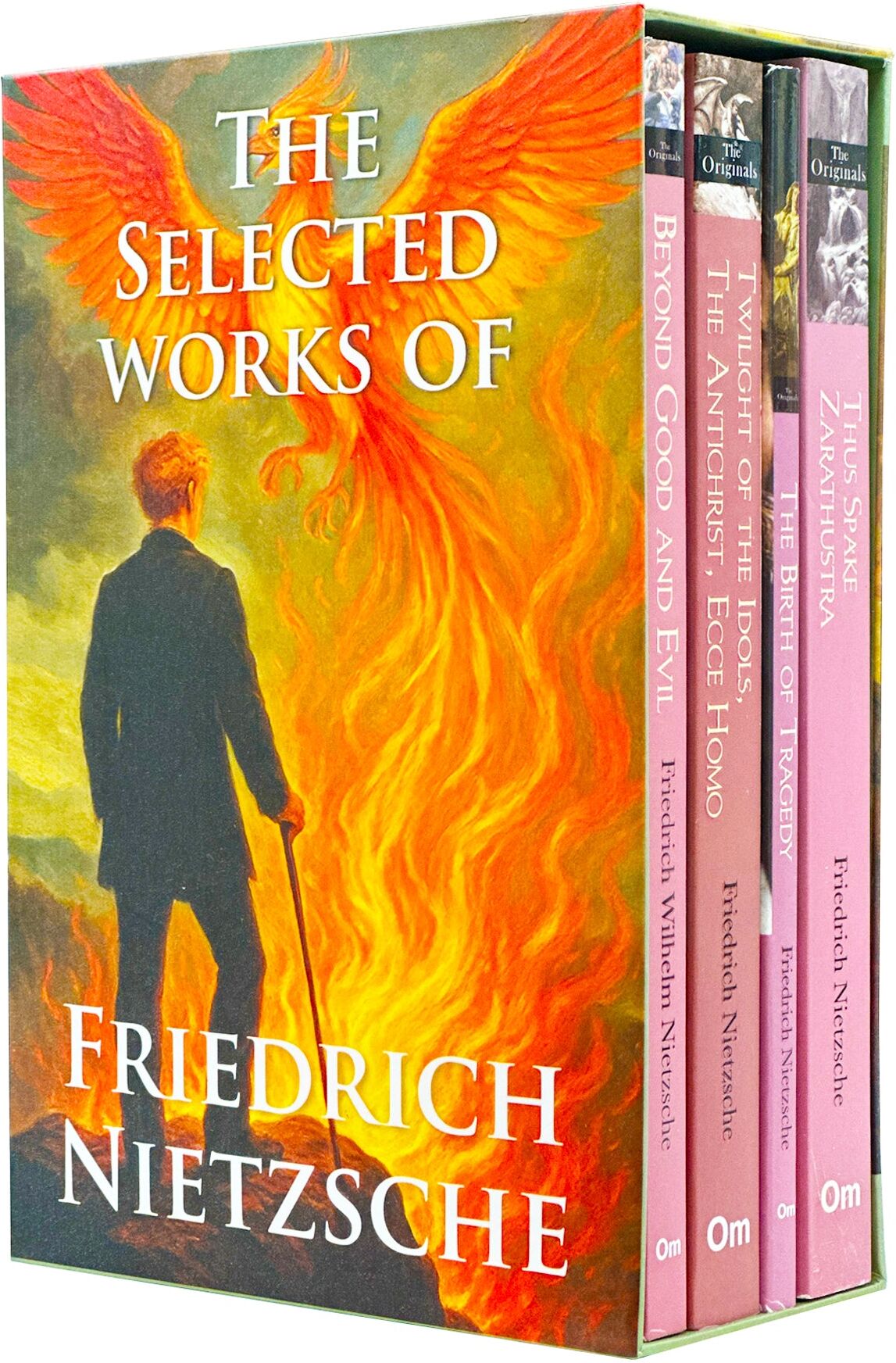
OM Books The Selected Works of Friedrich Nietzsche 4 Books Collection SetThe works of Friedrich Nietzsche, German philosopher and cultural critic, influenced Western philosophy and intellectual history. This box set brings together his most influential works that include his radical critique of truth in favour of perspectivisim; a genealogical critique of religion and Christian morality; the aesthetic affirmation of life and the profound crisis of nihilism; and a charaterisation of the human subject as the expression of competing wills.12,95 £*Shipping: 2,99 £Secure redirect to the provider
-
Fimo Pontefix Dental Prosthesis Adhesive 50 grHealth and Beauty Oral Care Fimo Pontefix Dental Prosthesis Adhesive 50 gr Pontefix Denture Adhesive 50g is a professional adhesive specially formulated to provide a secure and long-lasting hold for dentures. Thanks to its innovative composition, it guarantees a firm fit all day long, preventing shifting or discomfort, and providing greater comfort for the wearer. Its creamy texture allows for easy and even application, perfectly adapting to the surface of the denture and ensuring a reliable and comfortable wearing experience . Pontefix is the ideal solution for keeping your dentures stable and enjoying the security you need for everyday activities like speaking and eating. Benefits • Provides a durable fixation for partial or complete dentures. • It prevents the prosthesis from moving or causing discomfort during the day. • Improves comfort when chewing, speaking and smiling. • Creamy texture that allows for easy and even application . • Compatible with most dental prosthesis materials. • Reduces irritation and discomfort in the gums. • Reliable and safe formula, developed specifically for denture care. • 50g container, enough for prolonged and practical use at home. Who is it for? • People who use partial or complete dentures. • Ideal for those seeking a secure and stable fit throughout the day. • Recommended for users who experience movement or slippage of the prosthesis. • Perfect for adults who want to increase comfort when eating, speaking, or performing daily activities. • Suitable for any user looking for a reliable and easy-to-apply solution for their dentures. How do I apply it? • Clean and dry the prosthesis before applying the adhesive to ensure better adhesion. • Place a small amount of Pontefix Denture Adhesive on the areas in contact with the gums. • Distribute the product evenly, avoiding excess that could seep outside the prosthesis. • Insert the prosthesis into your mouth and press gently for a few seconds to ensure a secure fit. • Remove any excess adhesive that may ooze out over the edges. • To remove the prosthesis, make gentle movements and rinse with warm water to remove adhesive residue. Product Use • Daily use according to the need for prosthesis fixation. • Ensures stability and comfort during activities such as talking, eating, or smiling. • Compatible with daily cleaning of the prosthesis; it is recommended to remove and clean the prosthesis every night. • Store in a cool, dry place, out of reach of children. • Product safe for oral use and specifically formulated for the care of dental prostheses. Buy Pontefix Dental Prosthesis Adhesive 50 gr Pontefix Denture Adhesive 50g is available in pharmacies, drugstores, and online stores specializing in oral health. Purchasing this adhesive guarantees a reliable and comfortable hold for your dentures, ensuring you can carry out your daily activities safely and comfortably. Its 50g container provides a sufficient supply for extended use, combining effectiveness, comfort, and...29,37 £*Shipping: 3,99 £Secure redirect to the provider
-
Collected Works of Friedrich Nietzsche 6 Books Collection Box Set - Non Fiction - Hardback Wilco BooksTitles in this set: 1. The Twilight Of The Idols 2. Beyond Good And Evil 3. Human, All Too Human 4. Ecce Homo 5. Thus Spake Zarathustra 6. On The Genealogy of Morals Titles in this Set: The Twilight Of The Idols The Twilight of the Idols by Friedrich Nietzsche is an examination and destruction of the antiquated ideals and values of the time. In this work, the author is on a warpath against reason. The attacks on contemporary philosophers are frequently hostile, and the suggested opinions, often devastating However, it shows a deep understanding of morality and man's mean-spiritedness, while keeping alive an underlying feeling of optimism and affirmation. Beyond Good And Evil Beyond Good and Evil is Friedrich Nietzsche's seminal work that delves further into the concept previously discussed in Thus Spoke Zarathustra. First published in 1886, this book tackles the debate between an individual's feeling to stand out among others and our desire to serve others. This book explores a wide gamut of themes what is considered evil today was perhaps believed to be good before, an analysis of Christian morality, deep insights into human psychology, the concept of nationalism. This masterpiece of aphorisms continues to inspire thinkers even now. Human, All Too Human A series of maxims on everything from passion, science, vanity, women, and youth, to art, arrogance, and boredom, Human, All Too Human was referred to by Nietzsche himself as "the monument of a crisis" because it was produced during a period of profound change in his life. With his new "positivism" and scepticism, Nietzsche challenged his earlier metaphysical and psychological presumptions. Here, almost all of the issues from his later work are presented in highly witty language with a distinctive perceptiveness and honesty, not to mention mistrust and cynicism. It is still one of the foundational books for comprehending Nietzsche's philosophy. Ecce Homo Ecce Homo: How One Becomes What One Is was written in German by philosopher Friedrich Nietzsche in 1888. It was not published until 1908. Nietzsche traces his life and offers his own interpretation of his development as a philosopher He emphatically points out how unique his ideas are. He shows himself as separate from the masses who give in to self-indulgent feelings of pity. He announces boldly about how he does not feel remorse. He fully submits himself to his fatalistic beliefs and accepts life as it comes. The book contains several chapters with ironic self-laudatory titles, such as "Why I Am So Wise", "Why 1 Am So Clever", and " Why 1 Am a Destiny". Half-mocking and half-earnest, Ecce Homo is the definitive expression of Nietzsche's core beliefs. Thus Spake Zarathustra Friedrich Nietzsche's Thus Spake Zarathustra, published in four volumes between 1883 and 1885, is a work of philosophical fiction which seeks to address the problem of existence in a world where "God is dead". The author's search for meaning culminates in Zarathustra, the...19,99 £*Shipping: 2,99 £Secure redirect to the provider
-
Corega Bioactive Oxygen Dental Prosthesis Cleaning 66 UnitsHealth and Beauty Oral Care Corega Bioactive Oxygen Dental Prosthesis Cleaning 66 Units Partial denture tablets help protect natural teeth as part of good daily oral hygiene. For good daily oral hygiene: 1. Brush your natural teeth twice a day with a fluoride toothpaste. 2. Wash your partial denture daily with cleanser and protects. 3. Use seal and protect to stabilize your partial denture. 4. Visit your dentist regularly (every 6 months). Instructions for use: Place one tablet in a container with enough warm water (not too much) to cover the partial denture. Leave the partial denture immersed in the solution for 3-5 minutes. For best results, brush the partial denture with a soft toothbrush. Rinse the partial denture thoroughly with water. Discard any remaining solution immediately after use. Precautions for use: - Do not touch your eyes or mouth after handling the tablets or solution. - Do not use if you are allergic to any of the ingredients. - Do not place tablets or solution in your mouth. - Do not drink the cleaning solution or use it as a mouthwash.13,54 £*Shipping: 3,99 £Secure redirect to the provider



-
Did Nietzsche have depression?
There is no definitive answer to whether Nietzsche had depression as he was never formally diagnosed during his lifetime. However, many scholars and psychologists have analyzed his writings and personal correspondence and have suggested that he may have experienced symptoms of depression, such as feelings of despair, isolation, and nihilism. Nietzsche's own writings also reflect a deep sense of existential crisis and inner turmoil, which could be interpreted as indicative of depression. **
-
How sick was Nietzsche?
Nietzsche suffered from various health issues throughout his life, including severe migraines, vision problems, and digestive problems. In 1889, he experienced a mental breakdown and was diagnosed with syphilis, which eventually led to his deteriorating mental and physical health. He spent the last 11 years of his life in a state of mental and physical decline, eventually becoming completely incapacitated. His illness and decline greatly impacted his ability to continue his philosophical work and led to his eventual death in 1900. **
-
Are Friedrich Nietzsche demigods?
No, Friedrich Nietzsche was not a demigod. He was a philosopher and cultural critic known for his ideas on existentialism, morality, and the concept of the "Übermensch" or "overman." While his ideas have had a significant impact on philosophy and intellectual thought, he was a human being and not a supernatural or divine figure. It is important to approach his work critically and engage with his ideas in a thoughtful and analytical manner. **
-
Dental implants or dental bridges?
The choice between dental implants and dental bridges depends on various factors such as the patient's oral health, budget, and personal preferences. Dental implants are a more permanent solution as they are surgically placed into the jawbone and can last a lifetime with proper care. On the other hand, dental bridges are a more cost-effective option that can be a good choice for patients who are not suitable candidates for implants. It is best to consult with a dentist to determine which option is most suitable for your specific needs. **


How can one understand Nietzsche?
To understand Nietzsche, one must delve into his philosophical works and writings to grasp his ideas and concepts. It is important to study his key themes such as the will to power, the eternal recurrence, and the concept of the Ubermensch. Additionally, one should consider the historical context in which Nietzsche was writing, as well as his personal background and influences. Engaging with secondary sources and interpretations can also provide valuable insights into Nietzsche's complex and often controversial philosophy. **
Was Nietzsche friendly towards war?
Nietzsche had a complex and often contradictory relationship with war. On one hand, he was critical of the destructive and senseless nature of war, and he believed that it could lead to the decline of civilization. However, he also saw war as a potential catalyst for the emergence of a new, stronger society, and he believed that it could serve as a means of overcoming decadence and promoting the development of a higher human type. Overall, Nietzsche's views on war were nuanced and evolved over time, reflecting his broader philosophical concerns about power, struggle, and the potential for human advancement. **
Top-Angebote
Products related to Nietzsche:
-
Oradent Dental Prosthesis BrushHealth and Beauty Oral Care Oradent Dental Prosthesis Brush Oradent F Dental Prosthesis Brush Oradent F Dental Prosthesis Brush is a brush specially designed for cleaning dental prostheses, such as dentures, bridges and other orthodontic devices. With soft and flexible bristles, this brush effectively removes food debris, bacteria and plaque accumulated on the prosthesis, ensuring complete oral hygiene and protecting the health of your gums and natural teeth. Its ergonomic design and compact size make it easy to use, ideal for keeping your dentures in perfect condition. Benefits of Oradent F Dental Prosthesis Brush Effective and gentle cleaning: The soft bristles of the Oradent F Denture Brush remove food debris and plaque without damaging the surface of the denture. Infection Prevention: Using this brush regularly helps prevent the buildup of bacteria and fungi, which can cause bad breath or mouth infections. Ergonomic design: Its ergonomic handle makes it easier to grip and use the brush, allowing for more comfortable and precise cleaning. Easy access to difficult areas: The bristles are arranged in a way that allows easy access to the corners and surfaces of the prosthesis, ensuring complete cleaning. Compatibility with all types of prosthetics: Ideal for dentures, bridges and other orthodontic devices, ensuring that any type of prosthesis remains clean and free of debris. Who is Oradent F Denture Brush for? Oradent F Denture Brush is specially designed for people who wear dental prostheses, such as dentures, bridges or implants. It is perfect for those who need to keep their prosthesis clean and free of bacteria on a daily basis. In addition, it is ideal for people with sensitive gums or who wear dentures for a long time, as its soft bristles protect the health of the gums and do not damage the dentures. If you are looking for a brush that offers a gentle but effective cleaning for your dentures, this is the right product. How do I apply it? Using the Oradent F Denture Brush is simple. Here's how to get the most out of it: Wet the brush: Before using the brush, wet the bristles with warm water. This will help soften food residue and make cleaning easier. Apply some toothpaste: Place a small amount of toothpaste on the bristles of the toothbrush. It is recommended to use a toothpaste suitable for dentures. Clean your denture: Gently brush the surfaces of the denture, making sure to clean all areas, including the edges and corners. Use gentle strokes to avoid damaging the denture. Rinse well: After brushing, rinse your dentures with warm water to remove any toothpaste residue or food debris. Use the brush daily: Use this brush as part of your daily cleaning routine to keep your dentures in good condition and prevent bacteria buildup. Product Usage Oradent F Denture Brush should be used regularly as part of daily oral hygiene. Its proper use ensures that your denture remains clean and free of food debris, plaque and bacteria, preventing...5,38 £*Shipping: 3,99 £Secure redirect to the provider
-
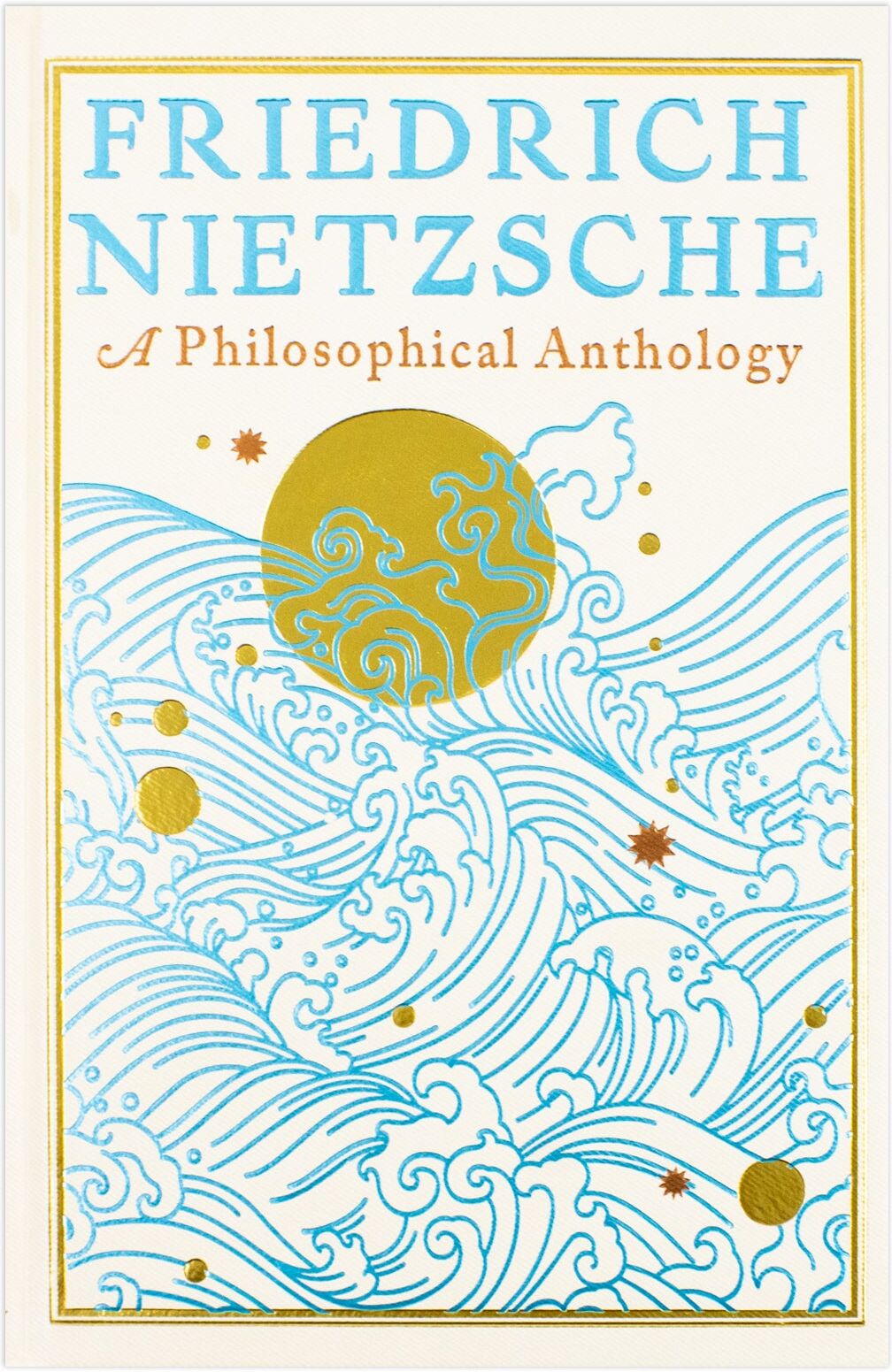
Wilco Books A Philosophical Anthology by Friedrich Nietzsche (Deluxe Leather Bound Edition)Dive into the mind of Friedrich Nietzsche with this comprehensive collection. Bringing together his most impactful works like Thus Spake Zarathustra, Beyond Good and Evil, On the Genealogy of Morals, etc, this volume confronts hard questions about power and morality. Nietzsche challenges conventional truth, dismantles traditional values, and demands that readers forge their own path. An unfiltered look into a philosophy that completely reshaped modern thinking for readers ready to question everything.10,99 £*Shipping: 2,99 £Secure redirect to the provider
-
OM Books The Selected Works of Friedrich Nietzsche 4 Books Collection SetThe works of Friedrich Nietzsche, German philosopher and cultural critic, influenced Western philosophy and intellectual history. This box set brings together his most influential works that include his radical critique of truth in favour of perspectivisim; a genealogical critique of religion and Christian morality; the aesthetic affirmation of life and the profound crisis of nihilism; and a charaterisation of the human subject as the expression of competing wills.12,95 £*Shipping: 2,99 £Secure redirect to the provider
-
Fimo Pontefix Dental Prosthesis Adhesive 50 grHealth and Beauty Oral Care Fimo Pontefix Dental Prosthesis Adhesive 50 gr Pontefix Denture Adhesive 50g is a professional adhesive specially formulated to provide a secure and long-lasting hold for dentures. Thanks to its innovative composition, it guarantees a firm fit all day long, preventing shifting or discomfort, and providing greater comfort for the wearer. Its creamy texture allows for easy and even application, perfectly adapting to the surface of the denture and ensuring a reliable and comfortable wearing experience . Pontefix is the ideal solution for keeping your dentures stable and enjoying the security you need for everyday activities like speaking and eating. Benefits • Provides a durable fixation for partial or complete dentures. • It prevents the prosthesis from moving or causing discomfort during the day. • Improves comfort when chewing, speaking and smiling. • Creamy texture that allows for easy and even application . • Compatible with most dental prosthesis materials. • Reduces irritation and discomfort in the gums. • Reliable and safe formula, developed specifically for denture care. • 50g container, enough for prolonged and practical use at home. Who is it for? • People who use partial or complete dentures. • Ideal for those seeking a secure and stable fit throughout the day. • Recommended for users who experience movement or slippage of the prosthesis. • Perfect for adults who want to increase comfort when eating, speaking, or performing daily activities. • Suitable for any user looking for a reliable and easy-to-apply solution for their dentures. How do I apply it? • Clean and dry the prosthesis before applying the adhesive to ensure better adhesion. • Place a small amount of Pontefix Denture Adhesive on the areas in contact with the gums. • Distribute the product evenly, avoiding excess that could seep outside the prosthesis. • Insert the prosthesis into your mouth and press gently for a few seconds to ensure a secure fit. • Remove any excess adhesive that may ooze out over the edges. • To remove the prosthesis, make gentle movements and rinse with warm water to remove adhesive residue. Product Use • Daily use according to the need for prosthesis fixation. • Ensures stability and comfort during activities such as talking, eating, or smiling. • Compatible with daily cleaning of the prosthesis; it is recommended to remove and clean the prosthesis every night. • Store in a cool, dry place, out of reach of children. • Product safe for oral use and specifically formulated for the care of dental prostheses. Buy Pontefix Dental Prosthesis Adhesive 50 gr Pontefix Denture Adhesive 50g is available in pharmacies, drugstores, and online stores specializing in oral health. Purchasing this adhesive guarantees a reliable and comfortable hold for your dentures, ensuring you can carry out your daily activities safely and comfortably. Its 50g container provides a sufficient supply for extended use, combining effectiveness, comfort, and...29,37 £*Shipping: 3,99 £Secure redirect to the provider
-
Was Nietzsche antisemitic?
Nietzsche's views on Judaism and Jewish people have been a topic of debate among scholars. While some argue that Nietzsche's writings contain antisemitic undertones, others believe that his criticisms were directed towards specific individuals or groups rather than the Jewish people as a whole. It is important to consider the historical context in which Nietzsche lived and wrote, as well as the complexity of his philosophical ideas, when discussing his views on this topic. **
-
What is Nietzsche 3?
Nietzsche 3 refers to the third phase of Friedrich Nietzsche's philosophical development, following his earlier periods of the "Apollonian" and "Dionysian" phases. In this phase, Nietzsche focused on the concept of the "will to power," which emphasizes the individual's desire for self-overcoming and self-assertion. He believed that this will to power drives human behavior and is the underlying force behind all existence. Nietzsche 3 represents a shift towards a more individualistic and existential perspective in his philosophy. **
-
Did Nietzsche have depression?
There is no definitive answer to whether Nietzsche had depression as he was never formally diagnosed during his lifetime. However, many scholars and psychologists have analyzed his writings and personal correspondence and have suggested that he may have experienced symptoms of depression, such as feelings of despair, isolation, and nihilism. Nietzsche's own writings also reflect a deep sense of existential crisis and inner turmoil, which could be interpreted as indicative of depression. **
-
How sick was Nietzsche?
Nietzsche suffered from various health issues throughout his life, including severe migraines, vision problems, and digestive problems. In 1889, he experienced a mental breakdown and was diagnosed with syphilis, which eventually led to his deteriorating mental and physical health. He spent the last 11 years of his life in a state of mental and physical decline, eventually becoming completely incapacitated. His illness and decline greatly impacted his ability to continue his philosophical work and led to his eventual death in 1900. **
Similar search terms for Nietzsche
-
Collected Works of Friedrich Nietzsche 6 Books Collection Box Set - Non Fiction - Hardback Wilco BooksTitles in this set: 1. The Twilight Of The Idols 2. Beyond Good And Evil 3. Human, All Too Human 4. Ecce Homo 5. Thus Spake Zarathustra 6. On The Genealogy of Morals Titles in this Set: The Twilight Of The Idols The Twilight of the Idols by Friedrich Nietzsche is an examination and destruction of the antiquated ideals and values of the time. In this work, the author is on a warpath against reason. The attacks on contemporary philosophers are frequently hostile, and the suggested opinions, often devastating However, it shows a deep understanding of morality and man's mean-spiritedness, while keeping alive an underlying feeling of optimism and affirmation. Beyond Good And Evil Beyond Good and Evil is Friedrich Nietzsche's seminal work that delves further into the concept previously discussed in Thus Spoke Zarathustra. First published in 1886, this book tackles the debate between an individual's feeling to stand out among others and our desire to serve others. This book explores a wide gamut of themes what is considered evil today was perhaps believed to be good before, an analysis of Christian morality, deep insights into human psychology, the concept of nationalism. This masterpiece of aphorisms continues to inspire thinkers even now. Human, All Too Human A series of maxims on everything from passion, science, vanity, women, and youth, to art, arrogance, and boredom, Human, All Too Human was referred to by Nietzsche himself as "the monument of a crisis" because it was produced during a period of profound change in his life. With his new "positivism" and scepticism, Nietzsche challenged his earlier metaphysical and psychological presumptions. Here, almost all of the issues from his later work are presented in highly witty language with a distinctive perceptiveness and honesty, not to mention mistrust and cynicism. It is still one of the foundational books for comprehending Nietzsche's philosophy. Ecce Homo Ecce Homo: How One Becomes What One Is was written in German by philosopher Friedrich Nietzsche in 1888. It was not published until 1908. Nietzsche traces his life and offers his own interpretation of his development as a philosopher He emphatically points out how unique his ideas are. He shows himself as separate from the masses who give in to self-indulgent feelings of pity. He announces boldly about how he does not feel remorse. He fully submits himself to his fatalistic beliefs and accepts life as it comes. The book contains several chapters with ironic self-laudatory titles, such as "Why I Am So Wise", "Why 1 Am So Clever", and " Why 1 Am a Destiny". Half-mocking and half-earnest, Ecce Homo is the definitive expression of Nietzsche's core beliefs. Thus Spake Zarathustra Friedrich Nietzsche's Thus Spake Zarathustra, published in four volumes between 1883 and 1885, is a work of philosophical fiction which seeks to address the problem of existence in a world where "God is dead". The author's search for meaning culminates in Zarathustra, the...19,99 £*Shipping: 2,99 £Secure redirect to the provider
-
Corega Bioactive Oxygen Dental Prosthesis Cleaning 66 UnitsHealth and Beauty Oral Care Corega Bioactive Oxygen Dental Prosthesis Cleaning 66 Units Partial denture tablets help protect natural teeth as part of good daily oral hygiene. For good daily oral hygiene: 1. Brush your natural teeth twice a day with a fluoride toothpaste. 2. Wash your partial denture daily with cleanser and protects. 3. Use seal and protect to stabilize your partial denture. 4. Visit your dentist regularly (every 6 months). Instructions for use: Place one tablet in a container with enough warm water (not too much) to cover the partial denture. Leave the partial denture immersed in the solution for 3-5 minutes. For best results, brush the partial denture with a soft toothbrush. Rinse the partial denture thoroughly with water. Discard any remaining solution immediately after use. Precautions for use: - Do not touch your eyes or mouth after handling the tablets or solution. - Do not use if you are allergic to any of the ingredients. - Do not place tablets or solution in your mouth. - Do not drink the cleaning solution or use it as a mouthwash.13,54 £*Shipping: 3,99 £Secure redirect to the provider
-
Corega Bioactive Oxygen Dental Prosthesis Cleaning 108 UnitsHealth and Beauty Oral Care Corega Bioactive Oxygen Dental Prosthesis Cleaning 108 Units Partial denture tablets help protect natural teeth as part of good daily oral hygiene. For good daily oral hygiene: 1. Brush your natural teeth twice a day with a fluoride toothpaste. 2. Wash your partial denture daily with cleanser and protects. 3. Use seal and protect to stabilize your partial denture. 4. Visit your dentist regularly (every 6 months). Instructions for use: Place one tablet in a container with enough warm water (not too much) to cover the partial denture. Leave the partial denture immersed in the solution for 3-5 minutes. For best results, brush the partial denture with a soft toothbrush. Rinse the partial denture thoroughly with water. Discard any remaining solution immediately after use. Precautions for use: - Do not touch your eyes or mouth after handling the tablets or solution. - Do not use if you are allergic to any of the ingredients. - Do not place tablets or solution in your mouth. - Do not drink the cleaning solution or use it as a mouthwash.16,17 £*Shipping: 3,99 £Secure redirect to the provider
-
The Complete Works of Friedrich Nietzsche 6 Books Box Collection Set - Non Fiction - Paperback Classic EditionsTitles in this set: 1. The Twilight Of The Idols 2. Beyond Good And Evil 3. Human, All Too Human 4. Ecce Homo 5. Thus Spake Zarathustra 6. On The Genealogy Of Morals Titles in this Set: The Twilight Of The Idols The Twilight of the Idols by Friedrich Nietzsche is an examination and destruction of the antiquated ideals and values of the time. In this work, the author is on a warpath against reason. The attacks on contemporary philosophers are frequently hostile, and the suggested opinions, often devastating However, it shows a deep understanding of morality and man's mean-spiritedness, while keeping alive an underlying feeling of optimism and affirmation. Beyond Good And Evil Beyond Good and Evil is Friedrich Nietzsche's seminal work that delves further into the concept previously discussed in Thus Spoke Zarathustra. First published in 1886, this book tackles the debate between an individual's feeling to stand out among others and our desire to serve others. This book explores a wide gamut of themes what is considered evil today was perhaps believed to be good before, an analysis of Christian morality, deep insights into human psychology, the concept of nationalism. This masterpiece of aphorisms continues to inspire thinkers even now. Human, All Too Human A series of maxims on everything from passion, science, vanity, women, and youth, to art, arrogance, and boredom, Human, All Too Human was referred to by Nietzsche himself as "the monument of a crisis" because it was produced during a period of profound change in his life. With his new "positivism" and scepticism, Nietzsche challenged his earlier metaphysical and psychological presumptions. Here, almost all of the issues from his later work are presented in highly witty language with a distinctive perceptiveness and honesty, not to mention mistrust and cynicism. It is still one of the foundational books for comprehending Nietzsche's philosophy. Ecce Homo Ecce Homo: How One Becomes What One Is was written in German by philosopher Friedrich Nietzsche in 1888. It was not published until 1908. Nietzsche traces his life and offers his own interpretation of his development as a philosopher He emphatically points out how unique his ideas are. He shows himself as separate from the masses who give in to self-indulgent feelings of pity. He announces boldly about how he does not feel remorse. He fully submits himself to his fatalistic beliefs and accepts life as it comes. The book contains several chapters with ironic self-laudatory titles, such as "Why I Am So Wise", "Why 1 Am So Clever", and " Why 1 Am a Destiny". Half-mocking and half-earnest, Ecce Homo is the definitive expression of Nietzsche's core beliefs. Thus Spake Zarathustra Friedrich Nietzsche's Thus Spake Zarathustra, published in four volumes between 1883 and 1885, is a work of philosophical fiction which seeks to address the problem of existence in a world where "God is dead". The author's search for meaning culminates in Zarathustra, the...12,89 £*Shipping: 2,99 £Secure redirect to the provider
-
Are Friedrich Nietzsche demigods?
No, Friedrich Nietzsche was not a demigod. He was a philosopher and cultural critic known for his ideas on existentialism, morality, and the concept of the "Übermensch" or "overman." While his ideas have had a significant impact on philosophy and intellectual thought, he was a human being and not a supernatural or divine figure. It is important to approach his work critically and engage with his ideas in a thoughtful and analytical manner. **
-
Dental implants or dental bridges?
The choice between dental implants and dental bridges depends on various factors such as the patient's oral health, budget, and personal preferences. Dental implants are a more permanent solution as they are surgically placed into the jawbone and can last a lifetime with proper care. On the other hand, dental bridges are a more cost-effective option that can be a good choice for patients who are not suitable candidates for implants. It is best to consult with a dentist to determine which option is most suitable for your specific needs. **
-
How can one understand Nietzsche?
To understand Nietzsche, one must delve into his philosophical works and writings to grasp his ideas and concepts. It is important to study his key themes such as the will to power, the eternal recurrence, and the concept of the Ubermensch. Additionally, one should consider the historical context in which Nietzsche was writing, as well as his personal background and influences. Engaging with secondary sources and interpretations can also provide valuable insights into Nietzsche's complex and often controversial philosophy. **
-
Was Nietzsche friendly towards war?
Nietzsche had a complex and often contradictory relationship with war. On one hand, he was critical of the destructive and senseless nature of war, and he believed that it could lead to the decline of civilization. However, he also saw war as a potential catalyst for the emergence of a new, stronger society, and he believed that it could serve as a means of overcoming decadence and promoting the development of a higher human type. Overall, Nietzsche's views on war were nuanced and evolved over time, reflecting his broader philosophical concerns about power, struggle, and the potential for human advancement. **
* All prices are inclusive of VAT and, if applicable, plus shipping costs. The offer information is based on the details provided by the respective shop and is updated through automated processes. Real-time updates do not occur, so deviations can occur in individual cases. ** Note: Parts of this content were created by AI.